
Traditional AI systems like ChatGPT and Claude are notorious for their high energy consumption due to the constant transfer of data between storage and processing units. However, a groundbreaking study from Loughborough University proposes a solution that could revolutionize this process.
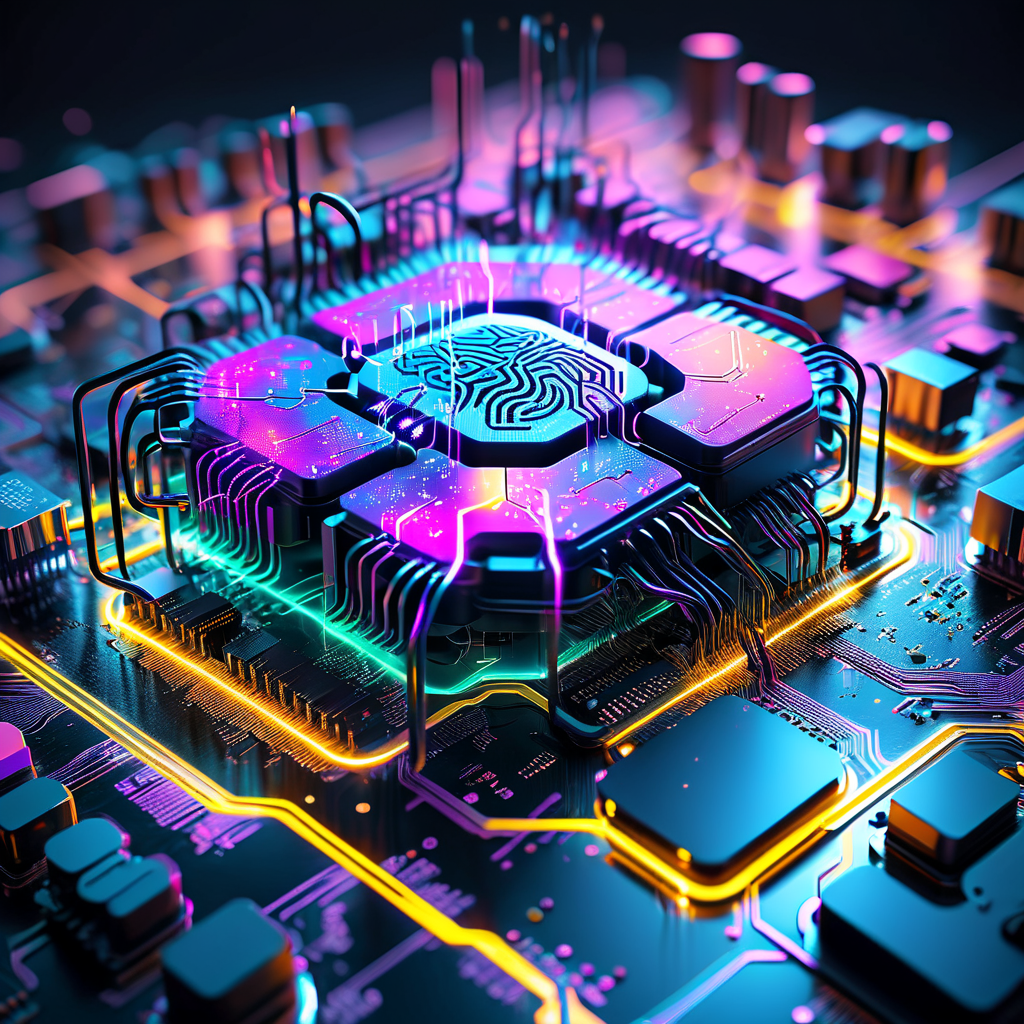
Researchers at Loughborough have developed a chip capable of directly handling dynamic data within the hardware itself, bypassing the need for software-based methods traditionally used in AI systems. This innovation has the potential to make certain AI tasks up to 2,000 times more energy efficient.
The newly designed device processes information directly on the hardware, paving the way for lower-power and more sustainable AI technologies. Dr. Pavel Borisov, the lead author of the study, highlighted the significance of this advancement: “This is exciting because it shows we can rethink how AI systems are built,” he said. “By utilizing physical processes rather than relying solely on software, we can significantly reduce energy consumption for these tasks.”
Conventional AI systems operate similarly to transferring documents between two separate offices (memory and processor), repeatedly moving data back and forth. The new chip functions akin to an integrated office that efficiently handles all tasks in a single location.
Central to the chip’s design is a memory resistor, which retains information about past signals and adjusts its response to new ones based on this history, mimicking the learning capabilities of the human brain. “Inspired by the numerous and seemingly random connections between neurons in the human brain, we designed complex physical networks within an artificial neural network using nanometre-thin films of niobium oxide,” explained Dr. Borisov.
The research demonstrated that these devices could forecast future developments in complex time series with energy consumption up to 2,000 times lower than traditional software-based solutions. Such capabilities are particularly beneficial for processing data involving small, sensitive changes over time, like weather patterns or stock market fluctuations.
For chaotic systems requiring constant updates and adjustments, conventional AI demands significant energy to track minor variations by continuously transferring information. The innovative chip is ideally suited for such applications, as it learns from past measurements and experiences, significantly reducing the required energy output.
While AI is commonly associated with chatbots or facial recognition software, its presence extends across numerous sectors. This new device targets time-dependent data rather than static information, making it suitable for monitoring dynamic changes in heart rates, brain activity, or environmental conditions.
Dr. Borisov envisaged applying this technology to various fields requiring continuous signal analysis, including automotive systems, robotics, nuclear power plants, and wearable health monitors. “My ultimate goal is to deploy this technology in applications that rely on time-dependent signals,” he stated. “Whether it’s detecting a stroke, assessing the condition of a car engine, or ensuring the normal operation of a nuclear reactor, these are prime areas for implementation.”