
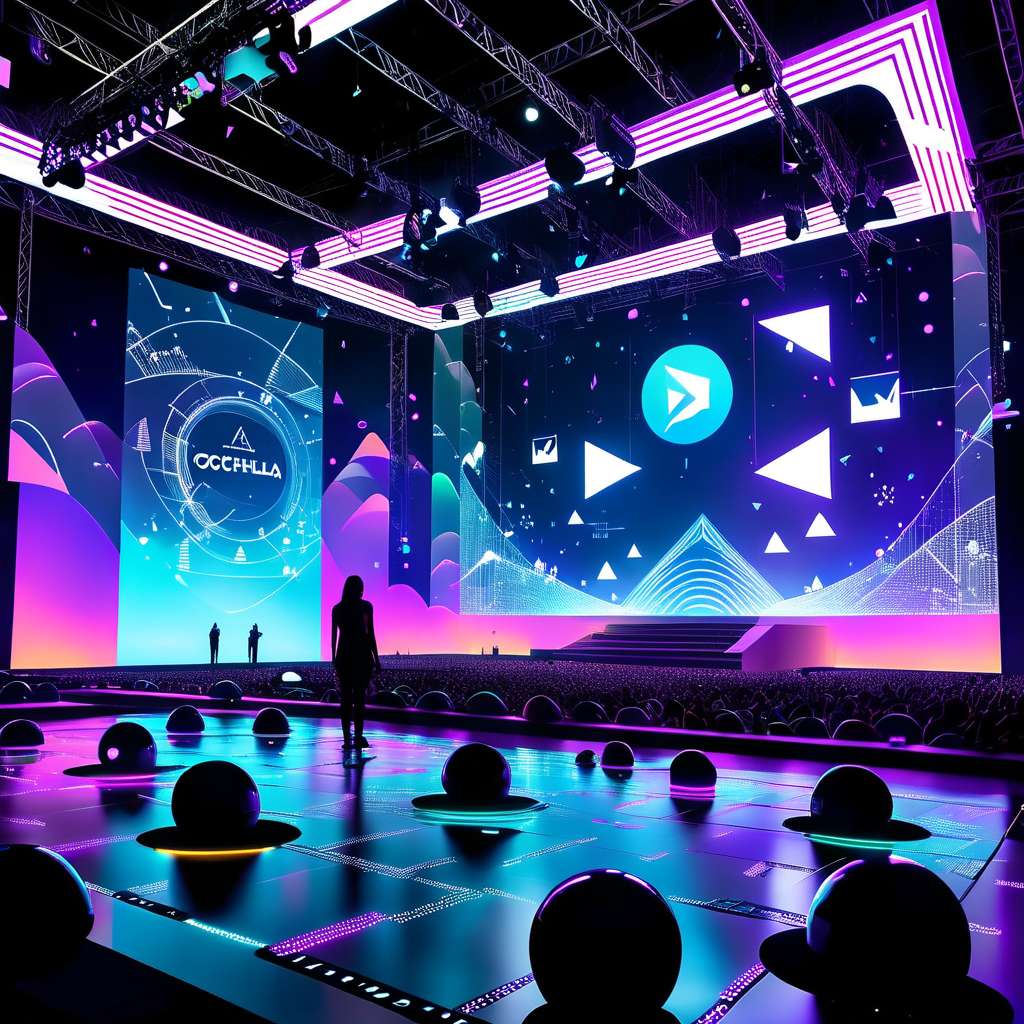
Transforming one of the largest music festivals globally into a testing ground for artificial intelligence, Coachella has partnered with Google DeepMind. The collaboration during this year’s event focused on developing experimental tools to revolutionize artist performances and fan experiences.
The innovation team at Coachella utilized Project Genie, Google DeepMind’s world-model platform, to create three prototypes throughout the 2026 festival. Ryan Cenicola, Coachella’s innovation production lead, stated in an interview with Decrypt, “We engaged in this project using their tools to explore how these could expand an artist’s creative canvas and enhance both on-site and at-home world building for artists while simplifying and increasing fun for fans.”
One of the prototypes, titled ‘Turning Performances Into Interactive Experiences,’ captures live shows and transforms them into 3D environments that fans can navigate. During the festival’s first weekend, teams recorded various elements such as lighting and audio from a Quasar stage set, recreating it in Unreal Engine.
Coachella envisions this technology evolving into “living archives” of performances, allowing fans to explore past shows from different angles or with real-time generated alternate visuals. Cenicola mentioned potential future applications, including immersive on-site fan engagement through emerging technologies like glasses.
Another prototype is a stage-design tool enabling artists to upload visuals or enter prompts to visualize their show on a 3D model of Coachella stages under varying conditions. This aims to democratize production tools typically available only to high-budget acts.
The third project, ‘Coachella vs. The Game,’ is a mobile game where players navigate digital worlds inspired by festival artists, akin to pre-visit games for theme parks, providing fans with an interactive lineup exploration tool.
Kevin McMahon, Coachella’s innovation partnerships lead, highlighted the rapid development timeline in a Decrypt interview: “Typically, you’re looking at six to 12 month development timelines to really push a high-quality experience. And that time has been shrunk significantly, even just since the beginning of this year.”
McMahon explained Google DeepMind’s selection over competitors like OpenAI or Anthropic due to its superior visual AI tools and existing festival relationships. “For us, we live in a really visual world, and they have the best visual models,” he noted.
These AI initiatives build on Coachella’s history of incorporating new technology, such as the 2024 launch of CoachellaQuests, an Avalanche blockchain game offering NFT-based challenges, and AR experiences for livestream viewers showcasing digital performance effects exclusive to online audiences.
Although these projects remain internal proofs of concept, Cenicola indicated that Coachella will assess this year’s learnings before deciding on future implementations. “It’s difficult right now to put a firm timeline on it,” he remarked. “We’re in the phase where we’re taking all the learnings from these three proofs-of-concept that we wrapped up last weekend and working with our team and with DeepMind to understand what the next steps are.”