
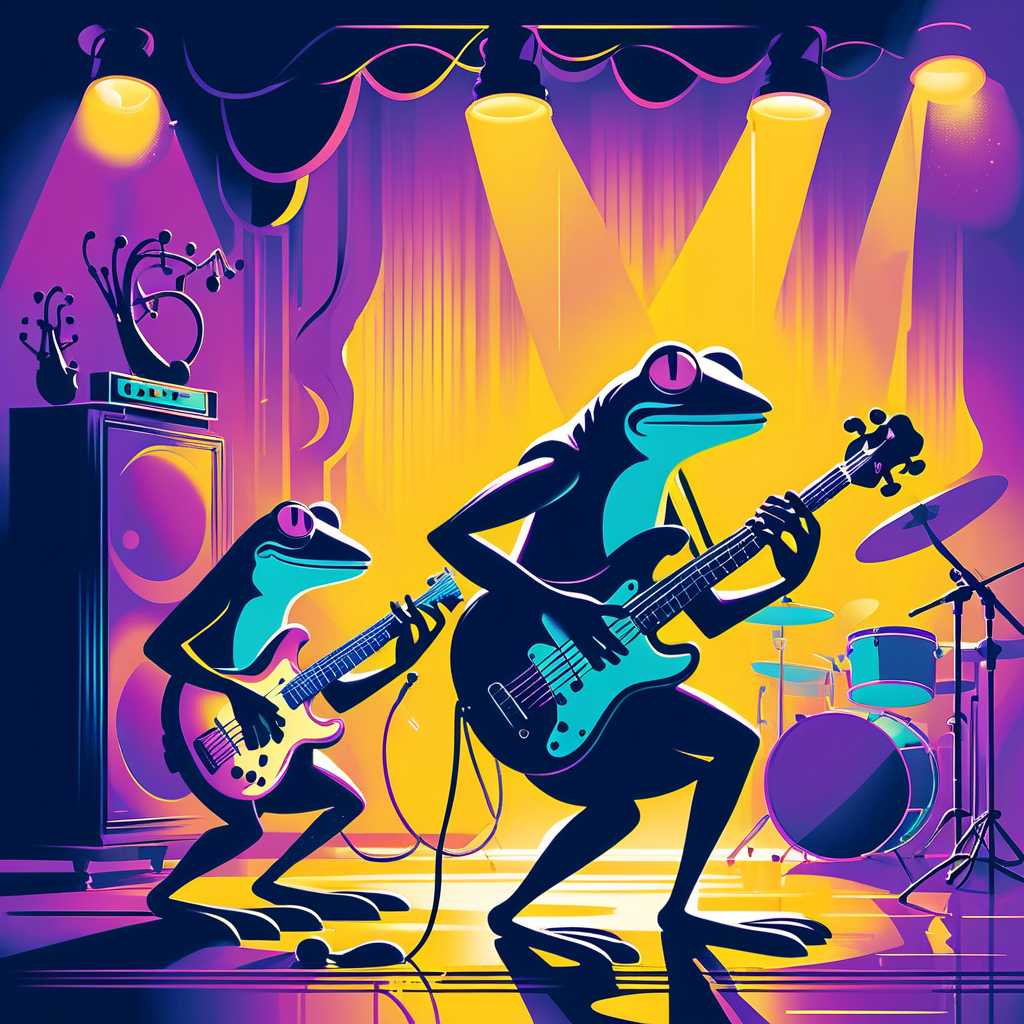
“O Sapo não lava o pé” (the frog doesn’t wash its feet) is a traditional Brazilian children’s song that precedes reading lessons for kids, featuring a simple tale of a foot-washing-averse frog. This week, IABatida reimagined the rhyme as a vintage 1950s blues track, with AI-crafted frogs performing in an atmospheric lounge setting. The result features soulful vocals, a warm guitar tone, and stand-up bass accompaniment.
The video, labeled as AI-generated, has garnered over 1.5 million likes on TikTok within days, alongside significant attention from its YouTube Shorts counterpart. Brazilian audiences are consistently expressing their astonishment at the quality of this creation—asserting it shouldn’t work but indeed does.
IABatida, translating to “AI Beat” in Portuguese, has developed a niche by transforming children’s songs and pop classics into AI-generated renditions set in various musical eras. The account boasts 328,000 followers and 6.7 million likes overall. Among its popular pieces is a 1950s Motown-style rendition of “Baby Shark,” with 1.6 million likes, while an indie-rock version has attracted another 388,900.
The music quality is surprisingly high; arrangements possess coherent structures including choruses, bridges, and restrained solos, complemented by pleasant vocals. The visuals align perfectly with the era, contributing to a meticulously crafted aesthetic rather than a haphazard assembly.
This frog blues video exemplifies an emerging category of internet phenomena: AI-native memes—artifacts that exist due to AI’s capabilities and would be unfeasible without it. Decrypthas observed this trend since late 2023 with the “Make It More” challenge, which involved progressively altering images via ChatGPT until DALL-E faltered.
The trend continued with “Ghibligeddon” in March 2025 when GPT-4o’s image generator spurred a surge of interest in ChatGPT as users transformed selfies into Studio Ghibli scenes. Sam Altman had to request moderation from the community amid OpenAI’s GPU strain. Another trend, Italian brainrot, introduced surreal characters like Tralalero Tralala—a three-legged shark in Nike sneakers—and Ballerina Cappuccina, a ballerina with a cappuccino cup for a head.
AI-native memes also include the “pack” and “dollification” trends initiated by Google following Nano Banana’s release. These trends allow users to transform photos into custom figurine-style images with simple prompts in Gemini. Twitter posts from @GeminiApp showcase how individuals are creating amusing miniature figures of themselves or pets.
IABatida’s creations fit within these patterns but take a unique approach. While Italian brainrot thrives on AI’s tendency for absurd outputs, the frog blues video hinges on AI’s unexpected competence. Viewers anticipate an amateurish production only to be captivated by its polished quality and find themselves humming along.
In 2026, the AI meme landscape has evolved with tools like Suno, Udio, and Google’s Lyria 3 capable of generating structured three-minute songs from brief prompts. Image models can now depict a frog band in authentic period settings without manual modeling. The threshold for producing something resembling a professional production is merely the time it takes to write a paragraph.
IABatida’s repertoire includes Aladdin’s “Arabian Nights,” “Pintinho Amarelinho,” and numerous Baby Shark adaptations, with each new cover ready when the algorithm concludes.