
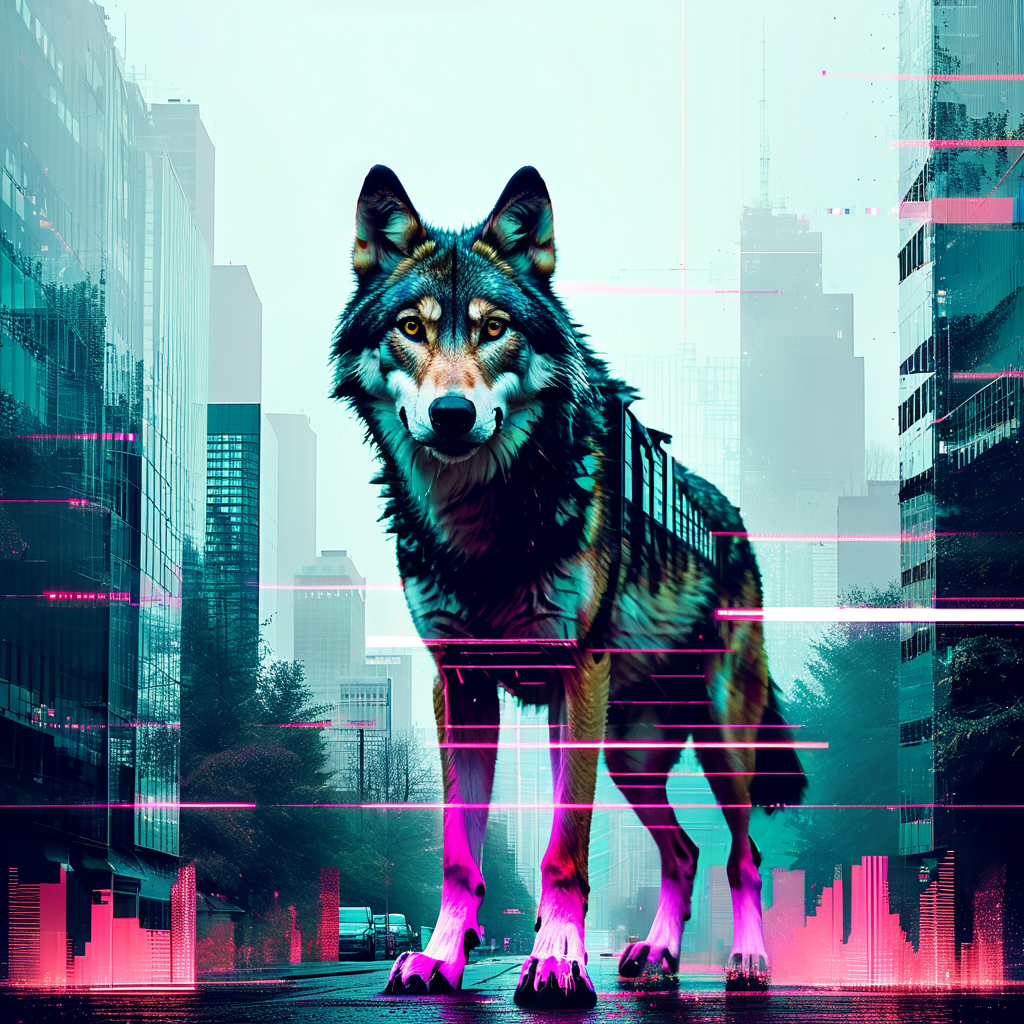
A South Korean man was apprehended by police on Thursday after disseminating an artificial intelligence-generated photo of a purportedly escaped wolf—an image so realistic it duped city officials and prompted an emergency alert to thousands. The ruse, according to law enforcement, caused the capture of an actual escaped wolf from a zoo to be postponed by up to nine days.
The man, whose identity has not been disclosed, is 40 years old and faces charges for hindering official duties through deception by sharing “fabricated images depicting wolf sightings generated via AI,” as stated by Daejeon Metropolitan Police. When interrogated, he admitted that his actions were “just for fun.”
The real-life drama involves a wolf named Neukgu—a two-year-old male who escaped from the O-World zoo enclosure in Daejeon on April 8. Neukgu is part of an initiative to restore the Korean wolf species, which has been declared extinct in its natural habitat on the Korean Peninsula.
Shortly after Neukgu’s escape, a counterfeit image surfaced online. It depicted a light-brown wolf crossing near the zoo at a road junction. The photo was convincing enough for Daejeon city officials to issue an urgent alert and display it during a formal press conference.
“A manipulated AI image delayed the wolf’s capture by as many as nine days,” reported Daejeon police. “The extended deployment of police and firefighters significantly hindered their primary duty to safeguard public safety.”
Capturing Neukgu was no small task; hundreds of firefighters, police, and soldiers were deployed, using drones and thermal cameras to track the 30-kilogram wolf. A local elementary school closed due to safety concerns. President Lee Jae Myung publicly prayed for the wolf’s safe return. Despite multiple confirmed sightings, Neukgu evaded capture until April 17 when a tip led authorities to a park near an expressway. Since his recapture, Neukgu has gained celebrity status, even inspiring its own meme coin.
The suspect was identified through surveillance footage and AI detection software. This case highlights a growing issue: the rapid spread of AI-generated images in emergency scenarios before verification is possible. Similar incidents occurred during the 2025 LA wildfires and Hurricane Helene, though no arrests were made for those fabricated visuals.
If found guilty, the man could face up to five years imprisonment or a fine of 10 million Korean won, approximately $6,700.